
Dhokra art is one of India’s most ancient and unique forms of metal casting. This traditional craft, practised primarily in West Bengal, Odisha, and Chhattisgarh, is known for its intricate designs and rustic charm. In this blog post, we explore the history, techniques, and cultural significance of Dhokra art.
Origins and History
Dhokra art has a rich history that dates back over 4,000 years. It is believed to have originated during the Indus Valley Civilization. The famous Dancing Girl of Mohenjo-Daro is an early example of this art form. Over the centuries, Dhokra art has been preserved by tribal communities, particularly the Dhokra Damar tribes. These artisans have passed down their skills through generations, keeping the tradition alive.
Also Read: Alcohol Ink Art: An Exhaustive Guide
The name of this artform comes from the Dhokra Damar tribes, who are the primary practitioners of this craft. While the art form is most commonly associated with West Bengal, Odisha, and Chhattisgarh, it is also found in other parts of India, such as Jharkhand and Telangana.
The Dhokra Technique
Dhokra art is a form of non-ferrous metal casting using the lost-wax technique. This process is complex and requires great skill. It involves several steps, each of which contributes to the final product’s uniqueness.
First, a clay core is shaped to form the base of the sculpture. This core is then covered with a layer of beeswax. The artisan carves intricate designs into the wax, creating the desired pattern. Once the wax model is complete, it is coated with layers of clay to form a mould. The mould is heated, causing the wax to melt and drain away, leaving a hollow cavity.
Molten metal, usually a mixture of brass and bronze, is poured into the mould. After the metal cools and solidifies, the clay mould is broken away, revealing the metal sculpture. The final step involves cleaning and polishing the piece to enhance its details and shine.
This labour-intensive process ensures that no two pieces are exactly alike. Each sculpture carries the artisan’s personal touch, making it a unique work of art.
Themes and Designs
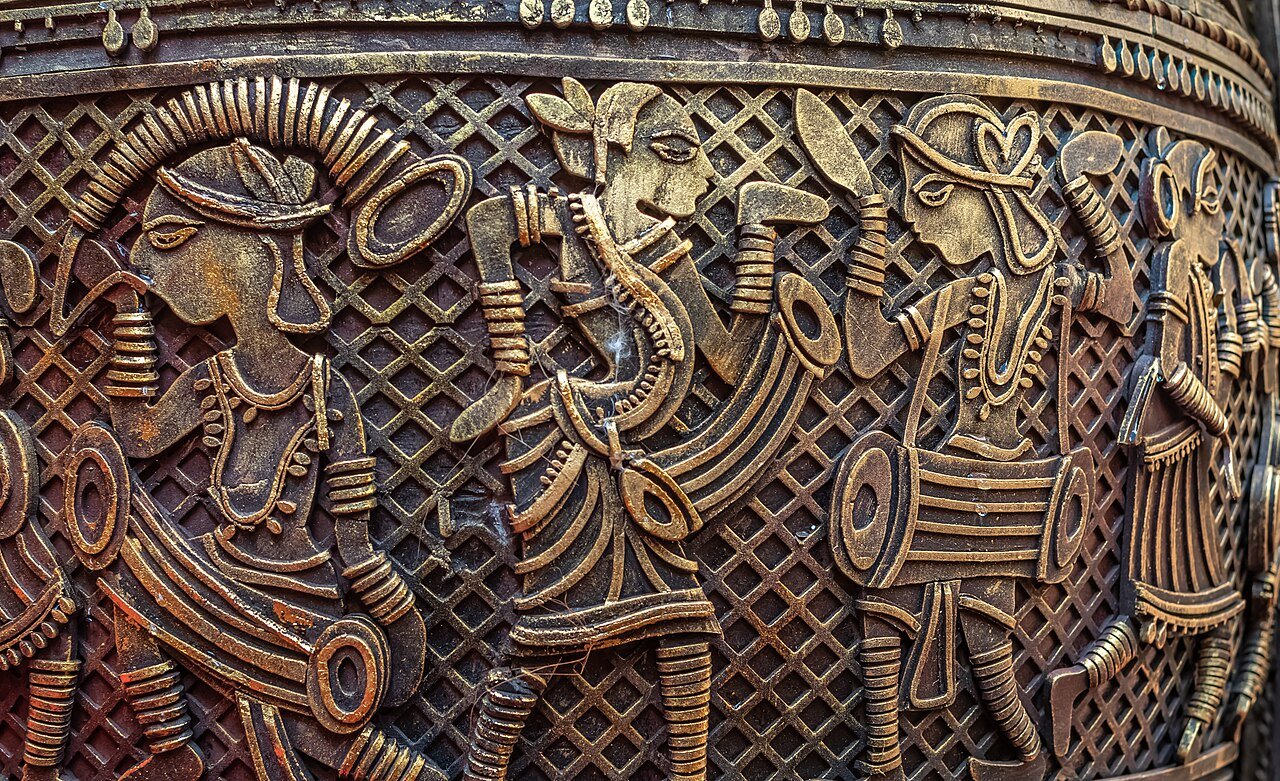
Dhokra art is deeply rooted in nature and tribal culture. The themes often revolve around animals, deities, and everyday rural life. Common motifs include elephants, horses, owls, and tribal gods. These designs reflect the artisans’ connection to their environment and spiritual beliefs.
Also Read: Pattachitra: A Window into Ancient Indian Folk Art
The sculptures are characterized by their rustic appearance and intricate detailing. The use of geometric patterns and textured surfaces adds to their visual appeal. Despite their simplicity, Dhokra pieces exude a sense of elegance and timelessness.
Cultural Significance
Dhokra art holds immense cultural and historical significance. It is not just a craft but a way of life for the tribal communities who practice it. The art form is closely tied to their traditions, rituals, and identity. For these artisans, creating Dhokra pieces is a means of preserving their heritage and passing it on to future generations.
In addition to its cultural value, Dhokra art has gained recognition as a symbol of India’s artistic diversity. It is celebrated for its eco-friendly nature, as it uses natural materials like beeswax, clay, and recycled metal. This makes Dhokra art a sustainable and environmentally conscious craft.
Challenges and Revival
Despite its beauty and significance, Dhokra art faces several challenges. The rise of industrialization and mass-produced goods has reduced demand for traditional crafts. Many artisans struggle to make a living, leading to a decline in the number of practitioners.
However, efforts are being made to revive and promote Dhokra art. Government initiatives, NGOs, and cultural organizations are working to provide training and market access to artisans. Exhibitions and fairs are also helping to raise awareness about this ancient craft.
Also Read: Batik Art: A Timeless Craft Bridging India and Indonesia
Conclusion
Dhokra art is a testament to India’s rich cultural heritage and artistic ingenuity. Its intricate designs, eco-friendly techniques, and deep cultural roots make it a unique and valuable art form. By supporting Dhokra artisans, we can help preserve this timeless tradition for future generations.
In a world that often prioritizes speed and convenience, Dhokra art reminds us of the beauty of slow, handmade craftsmanship. It is a celebration of nature, tradition, and human creativity. Through Dhokra art, we connect with the past while embracing the present, ensuring that this ancient craft continues to thrive.
Also Read: Aipan Art: Preserving Heritage Through Patterns and Colors
***
Hop over to www.rainbowsandhues.com to explore exciting offers on arts & craft supplies on our website!
Follow @rainbowsandhues on Instagram to get regular information on new products and deals!